Understanding Proof of Ownership Affidavit in Ontario
Legal ownership can get complicated fast when documents are lost or incomplete. But more than 30 percent of inheritance cases end up needing extra legal proof because paperwork is missing or unclear. That is why a proof of ownership affidavit is not just a backup plan it can become your strongest line of defense when everything else falls short.
Table of Contents
- What Is A Proof Of Ownership Affidavit?
- Why Is The Proof Of Ownership Affidavit Important?
- How Does The Proof Of Ownership Affidavit Work?
- Key Concepts Related To Proof Of Ownership Affidavit
- Practical Applications And Real-World Context
Quick Summary
| Takeaway | Explanation |
|---|---|
| A proof of ownership affidavit confirms ownership claims. | This legal document serves as sworn testimony when traditional ownership proof is unavailable or insufficient. |
| Prepare comprehensive documentation before creating the affidavit. | Gather evidence like purchase receipts and historical records to substantiate your ownership claim effectively. |
| Sworn testimony is required for legal validation. | Signing in front of a notary or commissioner of oaths affirms the truthfulness of the affidavit under penalty of perjury. |
| Useful in complex ownership scenarios. | It helps resolve disputes or transfer ownership without standard documentation, such as in inheritance cases or vehicle transfers. |
| Not an absolute guarantee of ownership. | Courts and authorities will review the affidavit, so accuracy and supporting evidence are crucial for its effectiveness. |
What is a Proof of Ownership Affidavit?
A proof of ownership affidavit is a legal document that provides sworn testimony regarding the ownership of a specific asset or property. This critical legal instrument serves as a formal written statement confirming an individual’s claim of ownership when standard documentation might be unavailable or incomplete.
Understanding the Legal Foundation
At its core, a proof of ownership affidavit is a legally binding document that declares ownership through a sworn statement. The affidavit must be signed in the presence of a qualified official such as a notary public or commissioner of oaths. What makes this document powerful is its legal weight: by signing, the declarant affirms the truthfulness of their statements under potential penalty of perjury.
The document typically includes comprehensive details about the asset in question, such as:
- Precise description of the property or asset
- Current owner’s full legal name
- Date of acquisition
- Source of ownership
- Specific identifying information
When Proof of Ownership Affidavits Are Used
Proof of ownership affidavits become crucial in scenarios where traditional ownership documentation is missing or insufficient. Common situations include:
- Transferring vehicle ownership without original registration
- Establishing property rights in inheritance cases
- Resolving disputes about asset ownership
- Registering previously unregistered equipment or vehicles
According to Ontario Legal Resources, these affidavits provide a formal mechanism for individuals to substantiate ownership claims when conventional paperwork falls short.
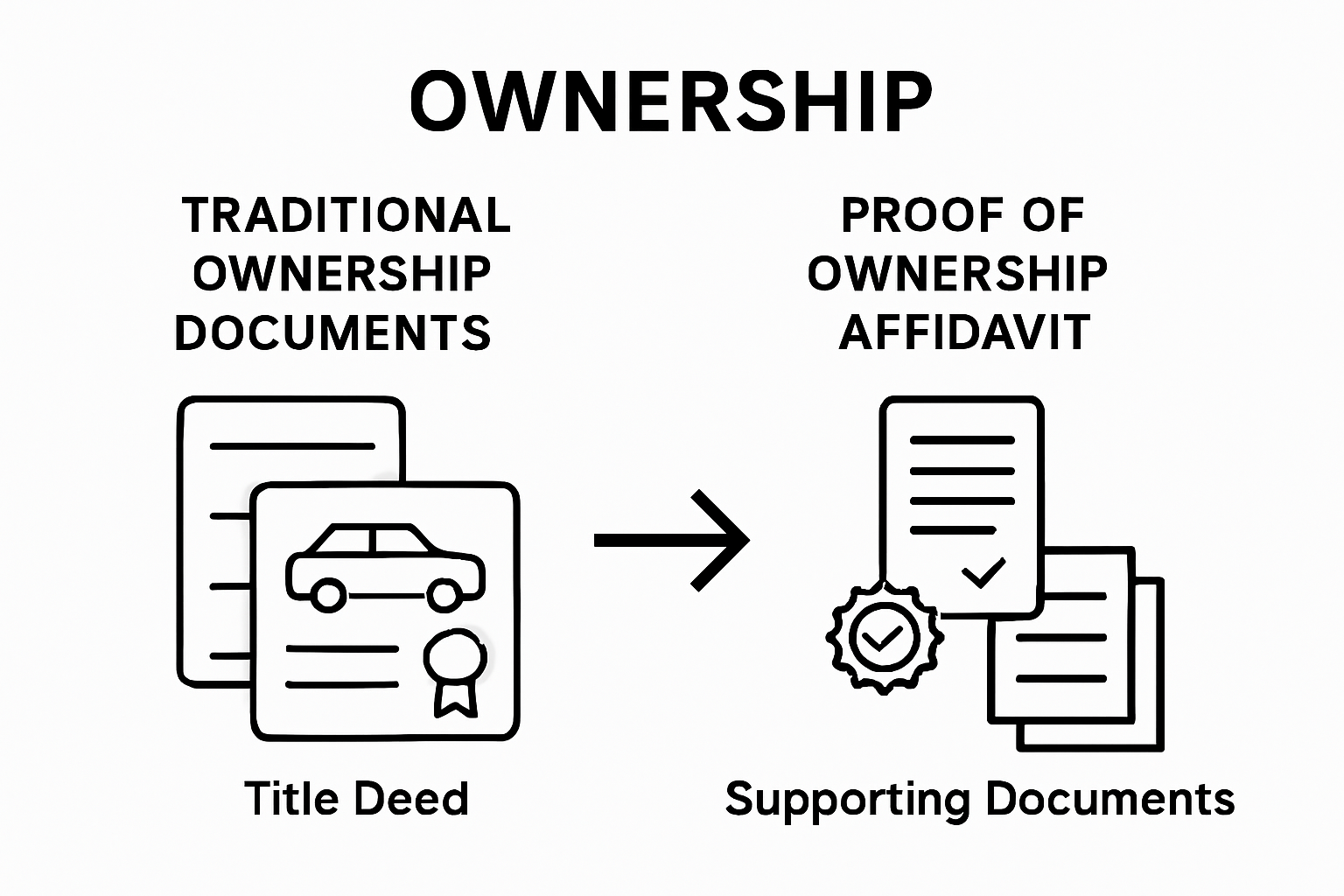 The document serves as a critical legal instrument that bridges documentation gaps while maintaining official legal standards.
While a proof of ownership affidavit offers a pathway to verify ownership, it is not an absolute guarantee. Courts and official bodies will still scrutinize the document’s contents, the credibility of the declarant, and supporting evidence. Individuals should prepare these documents with utmost accuracy and transparency to ensure their effectiveness in legal proceedings.
Why is the Proof of Ownership Affidavit Important?
Proof of ownership affidavits play a critical role in legal and administrative processes, serving as a vital mechanism for individuals to establish and validate their ownership rights when traditional documentation falls short. These documents provide a legally recognized pathway to confirm asset ownership in complex or challenging scenarios.
Legal Protection and Validation
The importance of a proof of ownership affidavit stems from its ability to legally protect an individual’s property rights. When standard ownership documents are missing, damaged, or unavailable, this sworn statement becomes a powerful tool for establishing legitimate claims. The document creates a formal record that can be used in various legal contexts, from property transfers to inheritance disputes.
Key legal protections include:
- Establishing a verifiable ownership trail
- Providing a formal mechanism for claiming asset rights
- Creating a legally binding record of ownership
- Offering a solution when traditional documentation is incomplete
Resolving Complex Ownership Scenarios
Proof of ownership affidavits become particularly crucial in scenarios that involve complicated ownership transfers or documentation challenges. This might include situations such as:
- Inheriting property without clear title documents
- Transferring vehicles or equipment with incomplete registration
- Resolving family property disputes
- Registering assets acquired through non-traditional means
According to Ontario Legal Resources, these affidavits provide a standardized method for individuals to substantiate ownership claims when conventional documentation is insufficient.
Moreover, individuals can learn more about commissioning affidavits online to streamline the process of creating these critical legal documents. By offering a structured approach to verifying ownership, proof of ownership affidavits serve as an essential legal instrument that bridges documentation gaps and protects individual property rights.
How Does the Proof of Ownership Affidavit Work?
A proof of ownership affidavit operates through a structured legal process that transforms a personal declaration into a credible, legally recognized document. This mechanism allows individuals to establish ownership rights when conventional documentation is unavailable or insufficient.
Preparation and Documentation
The process begins with comprehensive document preparation. The individual claiming ownership must gather all available evidence and information related to the asset. This documentation might include purchase receipts, historical records, photographs, or any supporting materials that can substantiate the ownership claim.
Key preparatory steps include:
- Collecting all relevant historical documentation
- Identifying precise details about the asset
- Organizing chronological proof of possession
- Verifying personal identification information
Sworn Testimony and Verification
Once documentation is assembled, the affidavit requires formal verification through sworn testimony. This critical stage involves appearing before an authorized official such as a notary public or commissioner of oaths. During this process, the declarant must:
- Confirm the accuracy of all statements
- Swear or affirm the truthfulness of the document
- Sign the affidavit in the presence of the official
- Understand potential legal consequences of false statements
According to Ontario Legal Resources, the individual will be required to swear or affirm that the contents of the affidavit are true, with commissioners of oaths typically available at courthouses, legal clinics, and municipal offices.
For those seeking a more convenient approach, learn more about online notarization options that can streamline this verification process. The final document serves as a powerful legal instrument, transforming a personal claim into an officially recognized statement of ownership.
Key Concepts Related to Proof of Ownership Affidavit
Proof of ownership affidavits involve several nuanced legal concepts that are crucial for understanding their function, validity, and application in various administrative and legal contexts. These documents represent more than simple paperwork they are complex legal instruments with specific requirements and implications.
Legal Terminology and Definitions
Understanding the fundamental legal terminology is essential for comprehending proof of ownership affidavits. Key terms include:
- Declarant: The individual making the sworn statement
- Commissioner of Oaths: An authorized official who administers the oath
- Sworn Statement: A formal declaration confirmed under oath
- Verifiable Evidence: Documentation supporting the ownership claim
The declarant must provide accurate information and understand that making false statements can result in serious legal consequences. Each term carries specific legal weight and implications for the document’s credibility and acceptance.
The following table summarizes key legal terms and definitions associated with proof of ownership affidavits to help readers quickly understand essential terminology referenced throughout the article.
| Term | Definition |
|---|---|
| Declarant | The individual making the sworn statement in the affidavit |
| Commissioner of Oaths | An authorized official who administers the oath or affirmation |
| Sworn Statement | A formal declaration confirmed by oath or affirmation |
| Verifiable Evidence | Documentation supporting the ownership claim |
| Notary Public | A qualified official who can witness and validate the affidavit’s execution |
| Perjury | The criminal offense of making false statements under oath |
| Asset Description | Detailed information identifying the property or asset in question |
Validity and Evidentiary Standards
Proof of ownership affidavits must meet rigorous evidentiary standards to be considered legally valid. These standards ensure the document’s reliability and authenticity. Critical considerations include:
- Comprehensive and precise asset description
- Clear demonstration of continuous ownership
- Supporting documentation
- Credible testimony from the declarant
According to Ontario Legal Resources, the document must be confirmed by oath or affirmation and administered by a qualified official to maintain legal integrity.
For individuals seeking a modern approach to creating these documents, explore online notarization options that can simplify the process while maintaining legal standards. Understanding these key concepts helps individuals navigate the complex landscape of ownership documentation with confidence and precision.
Practical Applications and Real-World Context
Proof of ownership affidavits serve critical functions across various scenarios where traditional documentation proves insufficient or unavailable. These legal instruments provide practical solutions for individuals and businesses navigating complex ownership transfer and verification processes.
Property and Asset Transfer Scenarios
In real-world contexts, proof of ownership affidavits become essential during property and asset transfers that lack standard documentation. Common scenarios include:
- Transferring inherited property without clear title documents
- Resolving incomplete vehicle registration records
- Managing family property distributions
- Addressing historical ownership gaps in equipment or land assets
These affidavits offer a structured legal mechanism to establish ownership when conventional paperwork falls short, helping individuals navigate complex transfer processes with increased confidence and legal protection.
The table below outlines common practical scenarios where proof of ownership affidavits are used, along with the specific need they address in each context.
| Scenario | Why a Proof of Ownership Affidavit is Needed |
|---|---|
| Inheriting property without clear title documents | Establishes ownership when traditional title documents are not available |
| Transferring vehicles with incomplete registration | Confirms rightful ownership for transfer or registration purposes |
| Registering previously unregistered equipment | Provides legal evidence of ownership when prior records do not exist |
| Resolving family property disputes | Serves as a formal statement supporting a party’s ownership claim |
| Managing asset transfer in business settings | Documents asset ownership for transaction, insurance, or compliance requirements |
Business and Financial Implications
Businesses and financial institutions rely on proof of ownership affidavits to validate asset ownership and facilitate transactions. The document serves multiple critical functions:
- Enabling legal property transfers
- Supporting loan and insurance applications
- Documenting asset ownership for tax purposes
- Resolving potential ownership disputes
According to Ontario Legal Resources, certain transactions like land transfers require specific affidavits to determine tax liabilities and support official registration processes.
Learn more about online notarization processes that can streamline these complex documentation requirements. By providing a legally recognized pathway to confirm ownership, proof of ownership affidavits play a crucial role in maintaining transparent and efficient property management systems across various personal and professional contexts.
Make Your Proof of Ownership Affidavit Fast and Stress-Free
Are you struggling to prove ownership of property or assets in Ontario because your paperwork is missing or incomplete? The article explains that preparing a proof of ownership affidavit can be overwhelming and time-consuming. Serious consequences can result if your affidavit lacks accuracy or is not properly witnessed by a notary public. We understand the worry that comes with trying to ensure your sworn statement holds up in legal situations and helps you safeguard your rights.
Now you can quickly and confidently secure your proof of ownership affidavit with our trusted online notary services. Avoid the hassle of in-person appointments. Experience the convenience of commissioning legal documents such as affidavits, statutory declarations and more right from your computer. Visit theonlinentoary.ca today to learn how easy it is to get started and protect your ownership rights without unnecessary delays.
Frequently Asked Questions
What is a proof of ownership affidavit?
A proof of ownership affidavit is a legal document that provides sworn testimony regarding the ownership of a specific asset or property, often used when standard documentation is missing or incomplete.
When should I use a proof of ownership affidavit?
You should consider using a proof of ownership affidavit when you need to establish ownership in situations such as transferring vehicle ownership without original registration, resolving disputes about asset ownership, or registering previously unregistered equipment.
How do I prepare a proof of ownership affidavit?
To prepare a proof of ownership affidavit, gather all relevant evidence related to the asset, including purchase receipts and identifying information, and then appear before a notary public or commissioner of oaths to swear or affirm the accuracy of your statements.
What are the legal implications of signing a proof of ownership affidavit?
By signing a proof of ownership affidavit, you are making a sworn statement under penalty of perjury, which means that providing false information could result in serious legal consequences.
Recommended
- Everything You Need to Know About Online Notarization in Ontario: Fast, Legal, and Convenient for Affidavits and Declarations (2025) - The Online Notary CA
- Why Opt for an Online Notary in Ontario - The Online Notary CA
- How to Commission and Get Affidavits Notarized Online in Ontario - The Online Notary CA
- The Complete Guide to Using an Online Notary Public for Affidavits and Declarations in Ontario (2025) - The Online Notary CA