Form 36 in Ontario: Your 2026 Divorce Filing Guide

TL;DR:
- Form 36 is a sworn affidavit that proves Ontario divorce criteria are met and must be filed after completing the separation period and application. Incorrect timing, errors, or lack of notarization can cause delays or rejection, extending the timeline for obtaining a divorce order. The minimum total cost to file and register the divorce is approximately $669 as of 2026.
Form 36 is the sworn affidavit required by Ontario family courts to verify that all legal criteria for divorce have been satisfied before a Divorce Order can be granted. Without it, no judge can finalize your divorce. The form is not a request for court relief but a piece of evidence confirming that you have already met every legal threshold. Understanding this distinction changes how you approach the entire filing process.
What is form 36 and when does it apply?
Form 36, formally called the Affidavit for Divorce, is a sworn legal document used in Ontario uncontested, joint, and simple divorce proceedings. Many people mistakenly believe it initiates the divorce, but it is actually the final evidentiary step. By the time you file it, your one-year separation must already be complete, your divorce application must be issued, and any deadlines for the respondent to file an answer must have passed. The form simply confirms all of that to the court.
The affidavit covers several critical areas: the breakdown of the marriage, the separation period, child support arrangements, and the respondent’s current status. Each of these must be accurate and truthful. Ontario courts treat the form as sworn testimony, which means errors carry real legal weight.
When and where to file Form 36 in Ontario
Timing your submission correctly is the single most common point of failure for self-represented applicants. Filing too early results in automatic rejection. The three procedural milestones you must clear before submitting are:
- The divorce application has been formally issued by the court.
- The mandatory one-year separation period is complete.
- The respondent’s deadline to file an answer has expired without a response.
Only after all three conditions are met should you prepare and submit the affidavit. Filing before the respondent’s deadline expires is one of the most common procedural errors, and it forces you to restart the process.
Once you are ready, you file with the specific Ontario Superior Court of Justice location managing your divorce file. That is typically the same court that issued your original application. Ontario courts permit online or in-person filing depending on the circumstances of your case. Online filing through the Justice Services Online portal is available for many uncontested divorces and saves a trip to the courthouse.
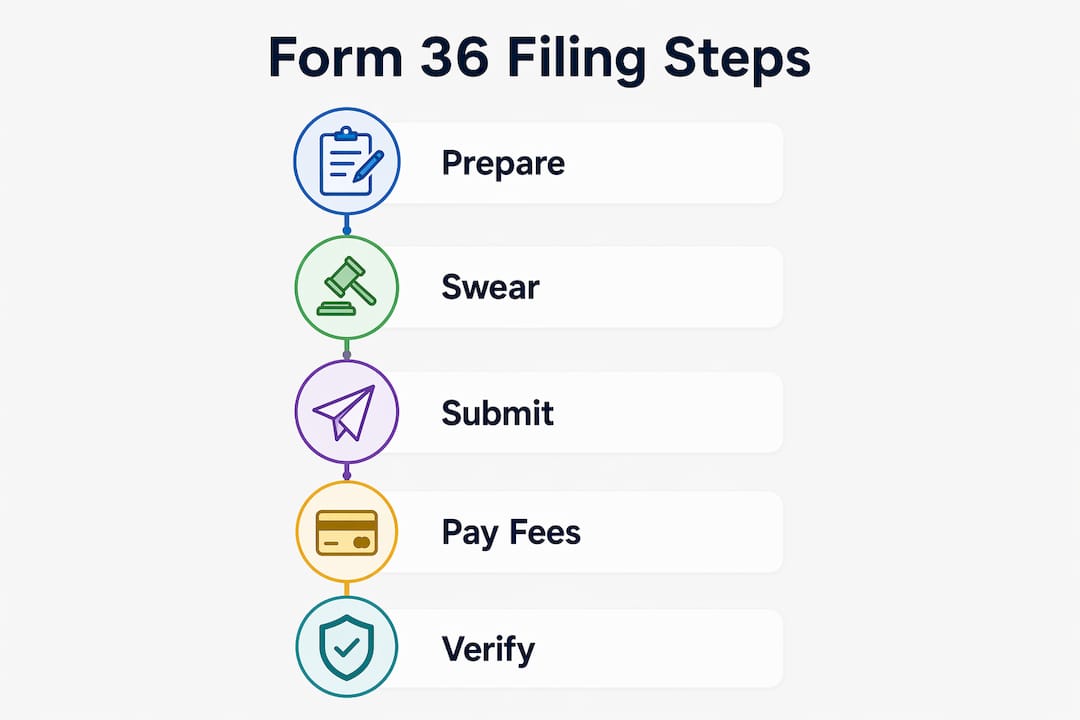
In joint divorce applications, each spouse must complete and submit their own separate form. You cannot share one affidavit between two applicants. This requirement catches many couples off guard, so confirm this with the court before preparing your documents.

Pro Tip: Check the specific court’s filing instructions before submitting online. Some Ontario court locations have case-specific requirements that differ from the general provincial guidelines.
How to accurately complete Form 36: instructions and common errors
Form 36 is a sworn affidavit, which means every statement you make carries the same legal weight as courtroom testimony. Accuracy is not optional. The most frequent errors that delay or derail Ontario divorce applications fall into four categories:
- Premature filing: Submitting before the respondent’s answer deadline expires or before the one-year separation is complete. The court rejects these automatically with no exceptions.
- Inaccurate child support details: Child support figures must strictly follow the Ontario Child Support Guidelines. Any discrepancy between what you declare and the applicable guideline amount can stall proceedings significantly.
- Unsigned or unsworn affidavits: The form must be sworn or affirmed before a commissioner of oaths or a notary public to be legally valid. An unsworn form is rejected outright.
- Missing or incomplete sections: Leaving fields blank or providing vague answers about the respondent’s status gives the court grounds to return the form for correction.
The swearing requirement deserves special attention. You cannot simply sign the form at home and submit it. A qualified commissioner of oaths or notary must witness your oath or affirmation and apply their seal. This step is what transforms a completed form into a legally valid affidavit. You can find a full breakdown of types of affidavits in Ontario to understand how Form 36 fits within the broader category of sworn documents.
Legal representation is not mandatory for an uncontested divorce, but legal review is recommended in cases involving children, property disputes, or any complexity beyond a straightforward separation. A single error can add weeks or months to your timeline.
Pro Tip: Before swearing the affidavit, read every section aloud to yourself. If any answer feels uncertain or incomplete, resolve it before you appear before the commissioner. Corrections after swearing require a fresh affidavit.
What does filing Form 36 cost in Ontario?
Filing the affidavit triggers real court fees, and you should budget for them before you begin. The table below outlines the primary costs associated with submitting Form 36 and completing an uncontested divorce in Ontario as of 2026.
| Fee Item | Amount |
|---|---|
| Affidavit filing fee (Form 36) | $445 |
| Federal divorce registration fee | $10 |
| Minimum total for uncontested divorce | $669 |
The $445 filing fee is payable to the Superior Court of Justice at the time of submission. That figure represents the court’s charge for processing the affidavit and reviewing the file. The $10 federal registration fee covers the recording of the divorce in the national registry. The total minimum of $669 assumes no additional motions, amendments, or contested proceedings arise.
Form 36 itself does not ask the court for anything. It provides evidence. The fees you pay are for the court’s administrative and judicial review of that evidence. If the form is rejected and you must refile, the fee structure may apply again depending on the circumstances, which is another reason accuracy matters from the start.
What happens after you file Form 36?
Once the court accepts your submission, a judge reviews the affidavit to confirm that all legal criteria for divorce are satisfied. If the review goes smoothly, the court issues the Divorce Order. The timeline from filing to receiving the order varies by court location and caseload, but you should expect several weeks at minimum.
Several outcomes are possible after filing:
- Accepted and approved: The judge finds the affidavit complete and accurate. The Divorce Order is issued, and you receive a copy.
- Returned for corrections: If the form contains errors, omissions, or inconsistencies, the court returns it with required corrections. You must fix the issues and refile, which extends your timeline.
- Rejected due to procedural timing: If you filed before all milestones were met, the court rejects the submission entirely. You must wait until the correct conditions are satisfied and start the filing process again.
- Contested by the respondent: If the respondent files an answer before their deadline expires, the case moves to a contested proceeding. Form 36 is no longer the appropriate next step, and the process changes significantly.
After the Divorce Order is issued, it does not take effect immediately. Under the Divorce Act, the order becomes final 31 days after it is issued unless both parties waive the appeal period in writing. Once the order is final, you can request a Certificate of Divorce, which is the document most institutions require as proof that your marriage has legally ended.
The notarized documents required at various stages of Ontario family law proceedings extend beyond Form 36, so understanding the full picture helps you plan ahead.
Key Takeaways
Form 36 is a sworn affidavit that provides the court with verified evidence that all legal divorce criteria are met, and filing it accurately and at the right time is the deciding factor in how quickly your Divorce Order is issued.
| Point | Details |
|---|---|
| Form 36 is evidence, not a request | The affidavit confirms legal criteria are met; it does not ask the court for anything. |
| Timing controls everything | File only after the application is issued, separation is complete, and the respondent’s deadline has expired. |
| Swearing is mandatory | The form must be sworn before a commissioner of oaths or notary to be legally valid. |
| Errors cause real delays | Inaccurate child support details or unsigned forms result in rejection and extended timelines. |
| Costs are fixed and predictable | The filing fee is $445, with a minimum total divorce cost of approximately $669 in Ontario as of 2026. |
What I’ve learned from watching people get Form 36 wrong
Most of the problems I see with Form 36 come down to one misunderstanding: people treat it like a starting gun when it is actually a finish line. They rush to file it the moment they feel ready, without checking whether the respondent’s deadline has actually passed. That single mistake costs weeks every time.
The child support section is where I see the most substantive errors. Applicants either guess at the numbers or copy figures from an old agreement without checking whether those figures align with the current Ontario Child Support Guidelines. Courts do not give the benefit of the doubt on this. If the numbers are off, the form comes back.
My honest advice is to get the affidavit sworn by a qualified notary before you do anything else with it. Do not sign it at home and assume you can get it witnessed later. The swearing step is what makes the document legally real, and skipping it or doing it incorrectly is the fastest way to lose weeks of progress. Online notarization has made this step far more accessible than it used to be, and there is no good reason to delay it.
One more thing: if your case involves children, do not file Form 36 without having someone review the child support section. The stakes of getting it wrong are higher, and the Guidelines are specific enough that a small error can look like a deliberate misrepresentation to a judge.
— Ken
Theonlinenotary can notarize your Form 36 affidavit online
Getting Form 36 sworn correctly is a non-negotiable step, and Theonlinenotary makes it straightforward. You can have your affidavit notarized online in Ontario without visiting a courthouse or scheduling an in-person appointment. The process is available 24/7, which means you are not waiting for office hours to move your divorce forward.

Theonlinenotary provides compliant notarization for affidavits, statutory declarations, solemn declarations, and more. Every session is conducted by a qualified Ontario notary, and your document meets the legal standards Ontario courts require. If you are ready to get your Form 36 sworn and submitted, Theonlinenotary is the direct next step.
FAQ
What is Form 36 used for in Ontario?
Form 36 is the Affidavit for Divorce, a sworn document that provides the Ontario Superior Court of Justice with verified evidence that all legal requirements for divorce have been met. It is required in uncontested and joint divorce proceedings before a Divorce Order can be issued.
When can I file Form 36?
You can file Form 36 only after your divorce application has been issued, the one-year separation period is complete, and the respondent’s deadline to file an answer has expired. Filing prematurely results in automatic rejection by the court.
Does Form 36 need to be notarized?
Yes. Form 36 must be sworn or affirmed before a commissioner of oaths or a notary public to be legally valid. An unsworn affidavit is rejected by Ontario courts without exception.
How much does it cost to file Form 36 in Ontario?
The court filing fee for Form 36 is $445, payable to the Superior Court of Justice. The minimum total cost for an uncontested divorce in Ontario is approximately $669, which includes a $10 federal registration fee.
What happens if Form 36 is rejected?
If the court rejects Form 36 due to errors or incomplete information, you must correct the issues and refile. This extends your divorce timeline. Corrections to a sworn affidavit require a new affidavit, which means the swearing process must be repeated.