Complexities of Remote Notarization in Ontario: 2026 Guide

TL;DR:
- Remote notarization in Ontario uses secure video technology to witness and certify documents legally. Success depends on meeting technical standards, ensuring document eligibility, and verifying institutional acceptance before the session. Proper preparation prevents legal risks and rejection in this increasingly regulated process.
Remote notarization is defined as a legally recognized process that allows documents to be witnessed and certified by a commissioned notary through secure, live video technology without requiring physical presence. Ontario recognizes this process under its evolving regulatory framework, aligning with national standards like the Uniform Law Conference of Canada’s model legislation and the principles underlying RULONA. The complexities of remote notarization go well beyond simply logging into a video call. They span technical requirements, document eligibility rules, fraud prevention protocols, and real gaps in institutional acceptance that can derail an otherwise valid notarization. Theonlinenotary provides remote notarization services for affidavits, statutory declarations, solemn declarations, and more across Ontario, making it one of the most accessible options for residents navigating this process.
What are the complexities of remote notarization in Ontario?
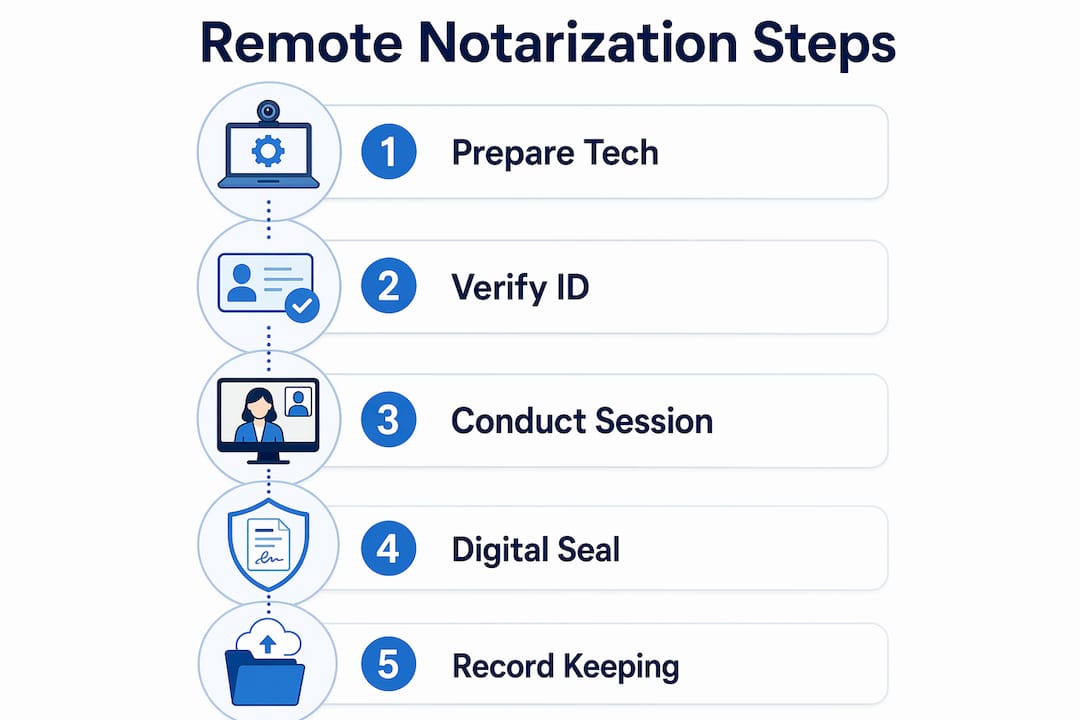
Remote notarization, formally called Remote Online Notarization (RON), requires a specific combination of technology, identity verification, and legal compliance that traditional in-person notarization does not. Each layer adds a potential point of failure if you are unprepared. Understanding where those failure points are is the first step toward a successful session.

Technical requirements you must meet
The minimum technical standard for a RON session includes a functioning camera, a working microphone, and a stable internet connection with at least 5 Mbps upload speed. A slow or unstable connection can interrupt the live session, invalidate the recording, or force a restart. Most platforms also require a modern browser and a device capable of rendering documents clearly on screen.
Sessions typically run 10–15 minutes and start at around $25, though cost rises with document complexity and the number of signers. That pricing reflects a process that is faster and more accessible than most in-person alternatives, but only when your setup works correctly.
Identity verification is the most demanding part of the technical process. 2026 compliance standards require government-issued photo ID, knowledge-based authentication (KBA), and biometric credential analysis. KBA asks you a series of questions drawn from your credit and public records. Biometric analysis scans your ID for holograms and embedded security features that go beyond what a human eye can check.
Pro Tip: Test your camera, microphone, and internet speed at least 30 minutes before your scheduled session. Run a speed test to confirm you meet the 5 Mbps upload threshold. A failed tech check is the most common and most preventable reason sessions get rescheduled.
One critical risk is KBA failure. Platforms lock users out for 24 hours after multiple failed KBA attempts, which can derail time-sensitive transactions. Mismatched credit file data or mistimed responses are the most common causes. Review your credit report before your session to catch any discrepancies.
The following checklist covers the core technical and identity requirements:
- Stable internet with at least 5 Mbps upload speed
- Device with a working camera and microphone
- Government-issued photo ID (passport, driver’s license)
- Access to your credit history for KBA questions
- Completed, fully filled document with no blank fields
Which documents can and cannot be notarized remotely in Ontario?
Not every document qualifies for remote notarization, and confusing eligibility rules is one of the most costly mistakes Ontario residents make. Knowing the boundaries before you book a session saves time, money, and legal risk.
-
Affidavits. Affidavits are among the most commonly notarized documents in Ontario and are fully eligible for remote notarization. This includes affidavits of identity, residence, and support used in immigration, court, and administrative proceedings.
-
Statutory declarations. Statutory declarations and solemn declarations are eligible for remote notarization in Ontario. Theonlinenotary handles these regularly for clients who cannot appear in person.
-
Powers of attorney. General powers of attorney can often be notarized remotely, but the receiving institution may impose its own requirements. Always confirm acceptance before booking.
-
Real estate documents. Some real estate documents can be notarized remotely, but lenders and title companies frequently require additional steps or in-person confirmation. The rules vary by transaction type and lender policy.
-
Wills and codicils. Wills and testamentary documents are typically excluded from remote notarization in Ontario. The law requires in-person witnesses to guard against undue influence and to verify the testator’s mental capacity. Attempting to bypass this rule exposes both the signer and the notary to legal liability.
One preparation step that trips up many clients is document completeness. Leaving blank spaces in a document before notarization leads to routine rejection by courts and government agencies. Fill every field or mark it “N/A” before your session begins. A notarized document with blank fields is not just inconvenient; it can be legally invalid.
You can review the step-by-step notarization process for Ontario to confirm your document type qualifies before booking.
How does security in remote notarization compare to traditional notarization?
Remote notarization produces a stronger evidentiary record than traditional paper notarization in most cases. RON platforms create recorded sessions, digital tamper-evident seals, and KBA logs that paper-based processes cannot match. If a dispute arises years later, that digital record is far more detailed than a notary’s stamp on a paper document.
The security architecture behind RON includes three layers that work together.
| Security layer | What it does |
|---|---|
| Knowledge-based authentication | Verifies identity using questions drawn from credit and public records |
| Biometric credential analysis | Scans government ID for embedded security features and holograms |
| Liveness detection | Confirms the signer is physically present and not a deepfake or pre-recorded video |
Liveness detection technology guards against deepfakes, but it is not infallible. The technology has improved significantly, yet it cannot replicate the full environmental awareness a notary has when sitting across a table from a signer.
In-person notarization remains the safer choice when a signer may be under duress, experiencing cognitive impairment, or otherwise vulnerable. A notary in the room can read physical cues, pause the process, and refuse to certify if something feels wrong. Remote sessions make that judgment harder.
Pro Tip: If you are notarizing on behalf of an elderly family member or someone with a medical condition, consider whether in-person notarization is the more appropriate option. The convenience of RON should never outweigh the signer’s protection.
Notaries are required to retain session recordings and electronic journals for 7–10 years depending on jurisdiction. That retention period creates a long-term audit trail that supports the document’s legal validity well after the session ends. For Ontario residents, this is a meaningful protection that paper notarization simply does not offer.
What institutional acceptance challenges affect remote notarization in Ontario?
Legal validity and real-world acceptance are not the same thing. The primary adoption barrier for RON is institutional acceptance, not the law itself. Banks, title companies, courts, and government agencies each set their own policies, and those policies do not always keep pace with the legislation.
This gap creates a frustrating situation. You can complete a fully compliant remote notarization and still have a document rejected by the receiving party. The legal implications of online notarization in Ontario are clear on paper, but institutional practice lags behind.
The following steps reduce the risk of rejection:
- Contact the receiving institution before booking your notarization session. Ask specifically whether they accept RON-certified documents.
- Request written confirmation of their acceptance policy. Verbal assurances are not reliable.
- Ask whether they require a specific platform, seal format, or additional authentication step.
- For real estate transactions, confirm with both the lender and the title company separately, as their policies may differ.
- For court filings, check the specific court’s practice directions, since acceptance varies by courthouse and document type.
Institutional hesitancy is most pronounced in high-stakes transactions involving property transfers, large financial instruments, and immigration applications. These are exactly the situations where a rejected document causes the most harm. Proactive verification before notarization is not optional; it is the single most effective way to protect your time and money.
For documents with cross-border implications, the online notarization guide for Ontario covers jurisdiction-specific acceptance requirements in detail.
Key Takeaways
Remote notarization in Ontario is legally valid but requires careful preparation across technical setup, document eligibility, security protocols, and institutional acceptance to avoid rejection or legal risk.
| Point | Details |
|---|---|
| Technical readiness is mandatory | Meet the 5 Mbps upload minimum and test your camera and microphone before every session. |
| KBA failure causes real delays | Platforms lock users out for 24 hours after failed attempts, so review your credit file first. |
| Document completeness prevents rejection | Fill all blank fields or mark them “N/A” before the session to avoid routine rejection. |
| Wills are excluded from RON | High-stakes testamentary documents require in-person witnesses under Ontario law. |
| Institutional acceptance is not guaranteed | Confirm acceptance with the receiving party before booking, especially for real estate or court filings. |
What I have learned after watching clients navigate RON in Ontario
The single biggest mistake I see is treating remote notarization as a simple digital version of walking into a notary’s office. It is not. The process is more structured, more technically demanding, and more dependent on third-party acceptance than most people expect.
What surprises clients most is the KBA step. People assume that having a valid ID is enough. It is not. Your credit file needs to be accurate, accessible, and consistent with the answers you give in real time. I have seen clients with perfectly valid documents get locked out of a session because their credit file had an old address or a name variation. That 24-hour lockout, when you are trying to close a real estate deal or meet an immigration deadline, is genuinely painful.
The security argument for RON is strong. A recorded session with a digital seal and a KBA log is harder to dispute than a paper document with a stamp. But I would push back on anyone who treats RON as universally superior. For vulnerable signers, for complex family situations, and for any transaction where the receiving institution has not confirmed acceptance, in-person notarization is still the right call.
The trend line is clear. Institutional acceptance is growing, technology is improving, and Ontario’s regulatory framework is maturing. But “growing” is not the same as “complete.” The clients who succeed with RON are the ones who do their homework first: they check eligibility, verify acceptance, prepare their documents, and test their technology. The clients who run into problems are the ones who assume the process will sort itself out.
My advice is to treat every remote notarization as a compliance exercise, not a convenience shortcut. The convenience is real, but it only materializes when the preparation is thorough.
— Ken
Theonlinenotary: compliant remote notarization for Ontario residents
Navigating the technical and legal requirements of remote notarization is significantly easier with a service built specifically for Ontario’s regulatory environment.

Theonlinenotary provides expert online notarization services for affidavits, statutory declarations, solemn declarations, invitation letters, and more, with 24/7 availability for clients across Ontario. The platform uses identity verification protocols that meet current compliance standards, including KBA and biometric credential checks, so your session is legally defensible from the start. The team guides you through document preparation before your session to prevent the blank-field rejections and eligibility errors that derail so many first-time users. If you need to understand public notary requirements in Ontario before booking, that information is available to review at any time.
FAQ
What is remote notarization and is it legal in Ontario?
Remote notarization, formally called Remote Online Notarization (RON), is a legally recognized process in Ontario that allows a notary to witness and certify documents via live, secure video technology. Ontario’s regulatory framework supports its use for most standard document types.
How do I notarize documents remotely in Ontario?
You connect with a commissioned notary through a secure video platform, complete identity verification including KBA and biometric ID checks, and sign your document electronically during the live session. Step-by-step instructions are available for Ontario residents.
What documents cannot be notarized remotely in Ontario?
Wills, codicils, and testamentary trusts are excluded from remote notarization in Ontario because they require in-person witnesses to guard against undue influence and verify mental capacity.
What happens if I fail the KBA identity check?
Platforms impose a 24-hour lockout after multiple failed KBA attempts. Review your credit report before your session to confirm your personal details are accurate and consistent.
Will all Ontario institutions accept a remotely notarized document?
Not automatically. Institutional acceptance varies widely, and banks, courts, and title companies each set their own policies. Always confirm acceptance with the receiving party before booking your session.
Recommended
- Online Notary Guide Ontario 2026: Notarize Documents Remotely - The Online Notary
- What is remote notary in Ontario? A 2026 guide - The Online Notary
- Is online notarization legal in Ontario? Your 2026 guide - The Online Notary
- Efficient Online Notarization for Multiple Documents in Ontario - The Online Notary