
Table of Contents
- What a Commissioner of Oaths Does (and What They Cannot Do)
- Commissioner of Oaths vs Notary Public: Key Differences
- Who Can Be a Commissioner of Oaths in Canada
- Commissioner of Oaths Affidavit: Requirements and Common Documents
- Online Commissioner of Oaths: How Remote Commissioning Works
- How to Prepare for an Appointment and Avoid Document Rejection
- Fees, Accessibility, and Urgent Service Options
- Frequently Asked Questions
Last Updated: October 5, 2026
What a Commissioner of Oaths Does (and What They Cannot Do)
A commissioner of oaths administers oaths and affirmations and witnesses signatures on sworn documents such as affidavits and statutory declarations.
The commissioner confirms the signer's identity and voluntary signature, then completes the jurat (certification clause) with signature, stamp, and date.
What a commissioner of oaths cannot do matters just as much. They cannot:
- Give legal advice or explain what a document means
- Draft affidavits or statutory declarations on your behalf
- Certify true copies of documents (that is a notary public function)
- Verify the truth of what you are swearing to, only that you swore it
A commissioner's role is procedural, not advisory; to know whether an affidavit is the right legal tool, speak to a lawyer.
Commissioner of Oaths vs Notary Public: Key Differences
The distinction is scope of authority. A commissioner of oaths administers oaths and witnesses signatures; a notary public also certifies true copies, prepares certain documents, and in some provinces handles specific transactions.
| Feature | Commissioner of Oaths | Notary Public |
|---|---|---|
| Administer oaths and affirmations | Yes | Yes |
| Witness signatures | Yes | Yes |
| Certify true copies | No | Yes |
| Draft legal documents | No | Limited, varies by province |
| Authority source | Provincial appointment | Provincial appointment or statute |
| Typical cost | Often free or low fee | Higher, varies by document |
If your document only needs a sworn signature witnessed, a commissioner of oaths is sufficient and usually cheaper. If it needs a certified copy or notarial certificate, you need a notary public.
This is a common reason documents get rejected at banks, government offices, and courts: it was commissioned when it needed to be notarized.
Who Can Be a Commissioner of Oaths in Canada
Authority to act as a commissioner of oaths is granted provincially or territorially, not federally. There is no national licence or registry, so the same person can be a commissioner in one province and have no authority in the next.
Terminology and appointment pathways change across borders: some jurisdictions say commissioner for taking affidavits, others commissioner of oaths. Powers are broadly similar, but paperwork, appointing body, and qualifications differ enough that you should never assume your home-province appointment travels with you.
How the role is framed across jurisdictions
- Ontario uses commissioner for taking affidavits. Lawyers, paralegals, municipal clerks, and designated public servants hold the power by virtue of their position; others apply for a formal appointment under provincial legislation.
- British Columbia appoints commissioners for taking affidavits for British Columbia, tied to that province. Lawyers and notaries public also hold the power through their own licences.
- Alberta appoints commissioners for oaths, generally valid only within Alberta unless a receiving body accepts it otherwise.
- Quebec does not use the commissioner of oaths model the same way. Sworn documents are typically handled by a notary, a lawyer, or another authorized official.
Common categories of appointed commissioners
Across most jurisdictions, commissioners fall into a few recognizable groups:
- Lawyers and paralegals, who usually hold the power through their licence rather than a separate appointment
- Notaries public, who hold broader powers that include the commissioner's role
- Municipal clerks, deputy clerks, and sometimes reeves or mayors
- Court staff and registry officers
What this means in practice
Without a lawyer, the fastest starting points are usually a municipal office, courthouse registry, Service Canada or provincial service counter, or an MP's constituency office.
The catch is twofold: those offices keep standard business hours, exactly when most working people cannot get there, and a commissioner appointed in one province may not be accepted by a receiving body in another.
That gap, both hours and jurisdictional mismatch, is where remote commissioning helps: a commissioner properly appointed in the relevant jurisdiction can witness a signature over live video, provided the process meets that jurisdiction's identity-verification and document-integrity requirements.
Ontario Ministry of the Attorney General, Commissioner for Taking Affidavits
Commissioner of Oaths Affidavit: Requirements and Common Documents
A commissioner of oaths affidavit is a sworn written statement where the commissioner witnesses your signature and completes the jurat, the certification clause at the end of the document. The document must be fully prepared before you arrive; commissioners do not fill in blanks, correct wording, or advise on content.
What separates a document that sails through from one that gets bounced is rarely the commissioning itself but whether it matches what the receiving institution requires.
Common documents and what each one typically needs
- Court affidavits. Usually require the deponent to sign in the commissioner's presence, with a completed jurat and, in many courts, an exhibit stamp or backsheet. Some courts require filing within a set number of days, so check the deadline before you book.
- Statutory declarations. Used for government programs, insurance claims, and name changes. The form usually specifies the exact wording the commissioner must witness; substituting your own can void it.
- Consent-to-travel letters for minors. Often requested by border officers when one parent travels alone with a child. There is no single mandated form, so the receiving body's expectations matter more than the letter's format.
- OSAP and educational institution documentation. Student funding forms frequently require a commissioner's signature and stamp, and some institutions require the commissioner to be appointed in the province where the institution operates.
- Name change applications. Provincial vital statistics offices typically require a sworn statement, and some require a specific commissioner category or a notary instead.
The validity checklist
For an affidavit to be valid, the following must be present:
- The deponent signs in the commissioner's presence, not before
- Valid government-issued photo identification is presented and, in many cases, recorded
- The jurat is completed with the commissioner's signature, stamp or seal where required, and the date
- The document contains no blank spaces that could be filled in later
- The commissioner's appointment covers the document type and the jurisdiction
How to confirm the receiving organization will accept it
This step is almost always skipped and causes the most rework. Before you book, ask four questions:
- Does the document need a commissioner of oaths, a notary public, or a specific official?
- Will a commissioner appointed in a different province or territory be accepted?
- Is a wet signature and physical seal required, or is an electronic signature and digital seal acceptable?
- Is there a deadline by which the commissioned document must be filed?
Get the answers in writing if you can; one email reply can save you from redoing the entire process after a deadline has passed.
Online Commissioner of Oaths: How Remote Commissioning Works
Remote commissioning allows a commissioner of oaths to witness your signature over live video, provided the process meets provincial requirements for identity verification and document integrity.
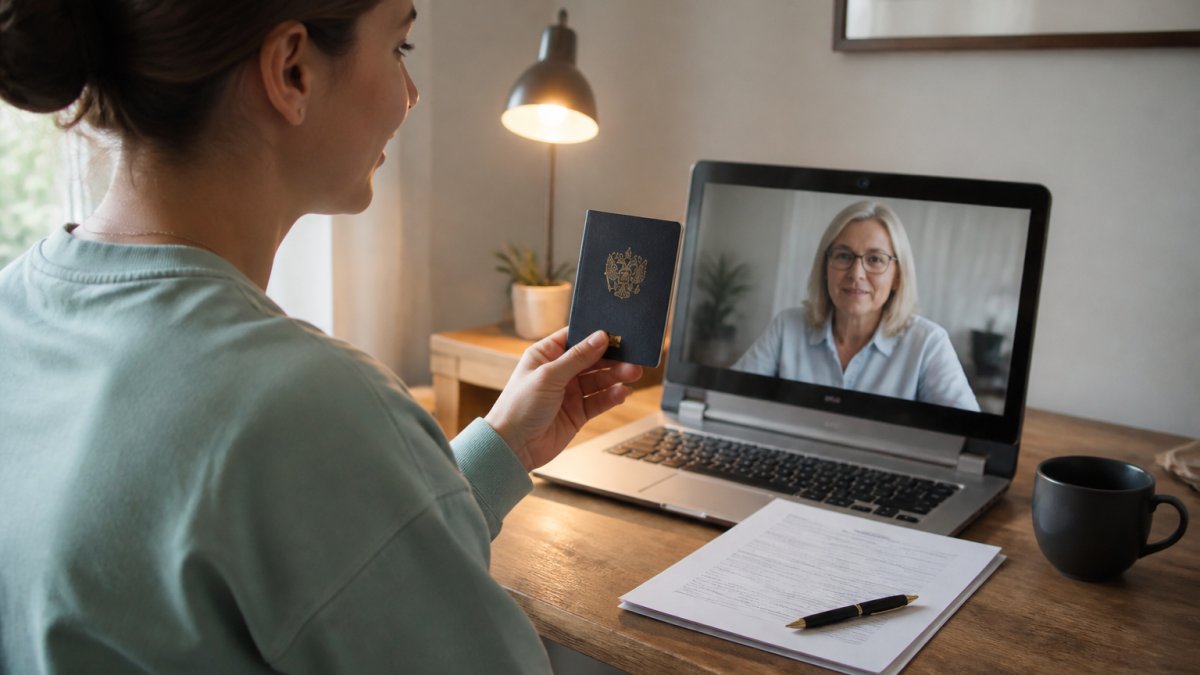
The typical remote process works like this:
- You upload your document to a secure platform
- You join a live video session with a commissioned official
- You present government-issued photo ID for verification
- You sign the document on camera while the commissioner observes
- The commissioner applies a digital seal and completes the jurat
- You receive a completed, tamper-evident copy with an audit trail
At The Online Notary, we built our platform around this workflow because driving to a courthouse during business hours does not work for most people.
The question we hear most is whether a digitally commissioned document will be accepted.
Government of Canada, Notarial Services and Document Authentication
How to Prepare for an Appointment and Avoid Document Rejection
Preparation is the difference between a five-minute appointment and a rejected document, and most rejections trace back to a few avoidable errors.
Before your appointment, work through this checklist:
- Confirm the document is fully completed with no blank fields
- Verify whether you need a commissioner of oaths or a notary public
- Check that the receiving institution accepts the format you are using
- Have valid government-issued photo ID ready
- Do not sign the document until instructed
The most frequent mistakes we see:
Signing in advance. This invalidates the document outright.
Wrong official. A certified true copy needs a notary, not a commissioner.
Blank spaces. An affidavit with empty fields can be rejected because it suggests information could be added after swearing.
Expired identification. Your ID must be current and valid on the day of commissioning.
Fees, Accessibility, and Urgent Service Options
Commissioner of oaths fees vary widely.
The trade-off is rarely the fee itself but access.
Urgent service options to look for:
- Same-day or next-day appointment availability
- Evening and weekend hours
- Remote video commissioning for documents that permit it
- Flat-rate pricing disclosed before you book, with no hidden per-page charges
At The Online Notary, we publish flat-rate pricing upfront and offer same-day appointments.
One honest limitation: not every document can be commissioned remotely.
Canadian Bar Association, Public Legal Information
The hardest part of getting a document commissioned is rarely the commissioning itself.
The Online Notary exists to remove that friction.
Book online with The Online Notary and get your document commissioned without rearranging your week.
Frequently Asked Questions
Who can act as a Commissioner of Oaths in Canada?
Eligibility is set by each province and territory. In Ontario, for example, lawyers, paralegals, notaries, municipal clerks, and certain government employees are automatically commissioners, while other residents can apply for appointment if they meet requirements such as being at least 18 and a Canadian citizen or permanent resident. Because rules differ across jurisdictions, check your province's official appointment page or confirm the person's commission before relying on their signature.
What is the difference between a commissioner of oaths and a notary public?
A commissioner of oaths administers oaths and affirmations and witnesses signatures on declarations and affidavits, but their authority is limited to the documents allowed under provincial law. A notary public has broader powers, including certifying true copies, witnessing international documents, and preparing certain instruments. For an uncontested affidavit or statutory declaration, a commissioner is often sufficient; for documents destined for another country or requiring authentication, a notary is usually needed.
Can a commissioner of oaths witness a document remotely?
Several provinces have introduced legislation permitting remote commissioning, provided the commissioner verifies identity using an approved method and the document is signed electronically or in a way that meets the province's requirements. Not every document qualifies, and some receiving bodies, such as courts or foreign authorities, may still insist on a wet-ink original. Confirm acceptance with the organization that will receive your document before booking a remote session.
What identification should I bring to a commissioner of oaths?
Bring government-issued photo identification that shows your full legal name and signature, such as a passport, driver's licence, or provincial health card where accepted. The name must match the name on your document exactly. If you have changed your name, bring supporting documents like a marriage certificate or legal name change certificate. For remote sessions, you will hold your ID up to the camera and may be asked additional knowledge-based questions.
Do I need to sign my document in front of a commissioner of oaths?
Yes, in most cases. The commissioner must witness your signature, so you should not sign the affidavit or declaration beforehand unless the form explicitly instructs you to. Signing in front of the commissioner allows them to confirm your identity and that you understand the contents. If you sign early, the commissioner may refuse to commission the document, and you may need to prepare a fresh copy.
How much does a commissioner of oaths cost in Canada?
Fees vary widely. Some municipal offices, courthouses, and public libraries offer free or low-cost commissioning during business hours, while private providers charge per document or per appointment. Online services typically publish flat rates on their pricing page, which can be more predictable than walk-in offices with variable availability. Always confirm the total fee, including any charges for additional copies or after-hours service, before you commit.